
Overview
Your deck shouldn’t feel like something you have to tiptoe across after a little rain. In this blog post, Downeast Mobile Power Wash LLC’s power washing technicians explain why slippery conditions develop, how power washing can help address them, what goes into cleaning different decking surfaces, and how to keep unwanted conditions from returning.
Highlights
- Why your deck gets slippery
- How power washing can help
- How deck power washing works
- When you should avoid deck cleaning
- How often your deck should be cleaned
- How you can prevent a slippery deck
- Why you should hire a power washing professional
Introduction
If your deck feel slick after it rains, the problem won’t disappear once the boards dry. Organic buildup can gradually settle into the surface, leaving you with slippery areas that become harder to manage through sweeping and other routine upkeep alone.
Deck power washing helps address these conditions by removing organic material from suitable deck surfaces. However, effective cleaning depends on the type of decking, its condition, and the method used.
In this blog post, Downeast Mobile Power Wash LLC will help you understand what makes your deck slippery and what it takes to properly clean the surface. You’ll also learn when to schedule cleaning, which types of decking are suitable for power washing, and what you can do between services to keep slippery conditions from returning.
Why Does Your Deck Get Slippery?
Your deck gets slippery when organic buildup begins covering the natural texture that normally provides traction underfoot. The problem develops quickly in damp, shaded areas, where lingering moisture creates ideal conditions for organic growth to spread across the surface.
Everyday exposure contributes to the slickness. Pollen, soil, and decomposing leaves settle into the wood grain and textured areas, while foot traffic works that material further into the surface. Eventually, the buildup forms a stubborn film rather than remaining loose debris. Once that film gets wet, it becomes noticeably slick, making the surface harder to navigate safely.
How Does Power Washing Help Make Your Deck Less Slippery?
Power washing helps make your deck less slippery by using pressurized water, which provides enough cleaning force to dislodge material that sweeping, rinsing, or light scrubbing can leave behind. The water penetrates the grooves, grain patterns, and uneven areas, then carries the loosened material away rather than leaving residue on the surface.
The amount of cleaning force needed depends on the decking. Dense hardwoods can generally tolerate a different approach than pressure-treated lumber, while painted or stained surfaces require more care to protect the existing finish.
By adjusting the cleaning force to the material, power washing can remove stubborn contamination without using more pressure than the surface requires.
What Types of Decks Can Be Cleaned?
This cleaning method works best on surfaces that can withstand the force of pressurized water without damage.
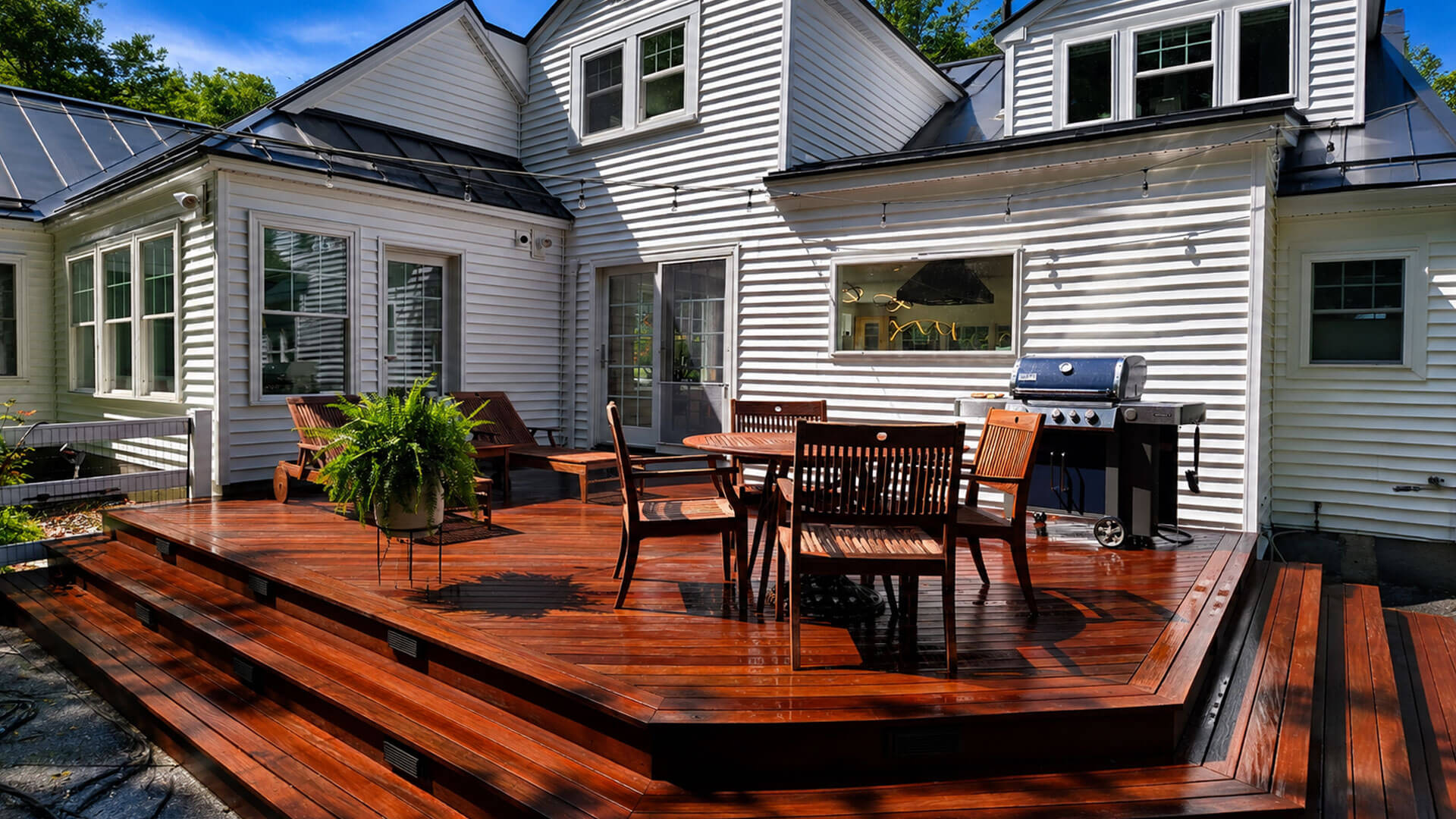
Common types of decking suitable for power washing include:
- Pressure-treated wood: Requires moderate, controlled pressure because the treatment protects against decay
- Hardwood decking: Withstands cleaning well because dense wood fibers are less easily disturbed by water pressure than those of softer species
- Painted wood decking: Requires lower pressure and careful technique because a forceful spray can lift paint that’s already cracked, loose, or deteriorating
- Stained wood decking: Calls for controlled pressure because aggressive cleaning can remove more than grime and begin stripping the existing stain from the wood
Since wood density, treatments, and finishes affect how a surface responds, the right power washing approach varies from one type to another.
How Does Power Washing Work?
Before power washing begins, you’ll want to evaluate the deck’s material, finish, condition, and level of buildup.
You may need detergent when water alone isn’t the best choice for breaking down what’s present. If you’re dealing with organic growth, grease, or deeply embedded grime, a compatible cleaner can be given time to dwell before washing. This loosens stubborn material, so you don’t have to rely on excessive pressure to remove it.
During washing, you can adjust the nozzle and your distance from the surface to control how forcefully the water hits the wood. If you hold the spray too close or use an overly concentrated stream, you can damage wood fibers, leave marks, or affect an existing finish.
You’ll also need to match the water pressure and temperature to the surface before working systematically across the boards, thoroughly rinsing away any loosened debris and cleaning solution.
What Detergents Are Safe To Use on Deck Surfaces?
Deck-safe detergents are typically mild cleaners formulated for exterior wood rather than harsh household chemicals or highly caustic products. Oxygen-based cleaners, including sodium percarbonate formulas, are commonly used on wood because they help break down organic grime and weathered buildup while being gentler on the surface than stronger chemical cleaners.
For algae, mildew, or other biological growth, cleaners containing sodium hypochlorite may be appropriate when properly diluted for the surface being treated. The concentration matters because a solution that’s too strong can discolor wood or affect an existing finish.
Painted and stained surfaces require extra care, since the cleaner must be compatible with the coating.
When Should You Not Power Wash Your Deck?
You should avoid power washing your deck when its condition or the weather makes cleaning more likely to cause damage than deliver a good result. Applying pressurized water to already compromised materials can worsen existing problems, while poor weather can interfere with cleaning and drying.
Situations where you should hold off include:
- Finding rotting or decaying boards
- Noticing loose, cracked, or badly splintered wood
- Having loose or protruding fasteners
- Seeing peeling or flaking paint
- Dealing with a deteriorating stain or finish
- Cleaning during freezing temperatures
Many of these issues can be addressed before cleaning. Repairing damaged areas, dealing with failing finishes, or simply waiting for better weather can make this cleaning method a more appropriate option.
What Time of Year Is Best for Deck Cleaning?
Spring and early fall are typically the best times for deck cleaning because moderate temperatures and drier conditions help the wood dry properly afterward. A spring cleaning clears away residue left by winter weather before outdoor living season begins, while an early fall service can remove buildup that accumulated throughout the summer.
Cleaning is best scheduled when temperatures are comfortably above freezing and there’s enough dry weather afterward for moisture to evaporate from the wood. Extremely hot conditions can also be less favorable because cleaning solutions may dry on the surface before they can be thoroughly rinsed away.
How Often Should Your Deck Be Cleaned?
Most decks should be cleaned about once a year, but the goal isn’t to follow a rigid schedule. Cleaning at regular intervals prevents surface residue from reaching the point where it begins to affect traction and create slippery conditions.
Some properties may need more frequent cleaning based on how quickly those conditions return. If the surface starts feeling slick underfoot, particularly when wet, waiting until the next annual cleaning may not make sense.
Treat annual cleaning as a baseline, then adjust the schedule based on the surface's condition throughout the year.
What Can You Do To Keep Your Deck From Getting Slippery?
Keeping your deck from getting slippery between cleanings requires some basic upkeep, particularly when it comes to controlling debris, moisture, and organic growth.
A few practical steps can help:
- Sweep away leaves, pine needles, and other debris
- Trim nearby trees and shrubs to increase sunlight and airflow
- Move planters, rugs, and furniture to help covered areas dry
- Clear gaps between boards to improve drainage
- Correct areas where water regularly pools
- Remove organic growth as soon as it appears
- Schedule routine cleaning to control stubborn buildup
Staying consistent with these habits can help the surface remain cleaner and drier, reducing the chance of slippery conditions returning prematurely.
Why Hire a Professional To Power Wash Your Deck?
Hiring a professional to power wash your deck helps ensure the cleaning method matches the surface. Water pressure, temperature, nozzle selection, and detergent strength all affect how the wood responds, and using too much force can leave visible marks, raise wood fibers, or damage an existing finish.
An experienced technician can also adjust the cleaning method as conditions change across the surface. Weathered boards, stained areas, and stubborn growth may each require different treatment to achieve an even result.
Proper technique also reduces unnecessary passes over the wood, helping remove buildup efficiently while limiting avoidable wear on the surface.
Get Your Deck Back in Shape With Power Washing
Your deck should be somewhere you can step outside and enjoy, not somewhere you have to watch every step after it rains. When slick buildup starts to get in the way, a thorough power wash can help restore a cleaner surface with better traction.
Downeast Mobile Power Wash LLC’s team takes the condition of your decking seriously, adjusting the cleaning approach to the material, finish, and buildup present. We use the appropriate pressure, temperature, and cleaning products to get the job done without treating every surface the same.
With us, you can trust that the job will be done right. Call us at (207) 989-8848 to schedule your deck power washing service today!